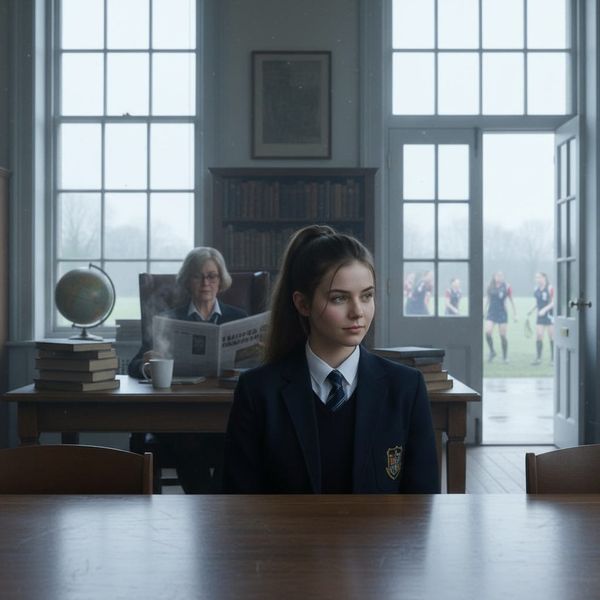
009 November 2016
For several days Julia changed nothing.
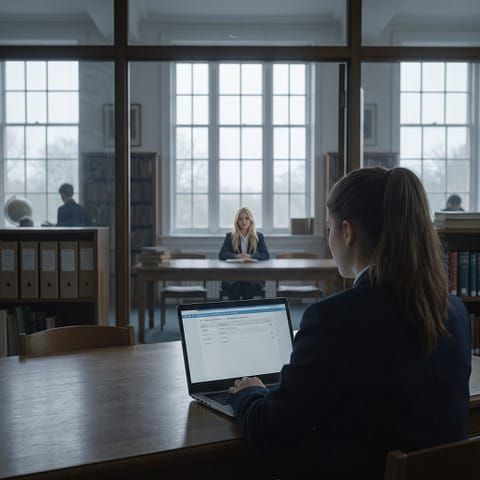
She entered the network only from the Reference Only room and never remained in a restricted section for long. The account allowed her to see more than she had expected, although not everything. Notices awaiting circulation sat beside room bookings and detention lists. Marks could be viewed and amended. Pastoral records occupied a separate area which demanded another password.
She began keeping notes on the parts she did not understand. Some evenings she looked up unfamiliar terms; on her next visit, she checked whether what she had read explained anything on the screen. Often it did not. Twice she reached a warning she had not expected and logged out without going further.
Among the less frequently used pages was one for setting up accounts. Several appeared to belong to people who had left. Others had names suggesting a purpose rather than a person: examinations, printing, temporary staff. Julia returned to the page over three afternoons before attempting to create one of her own.
She gave it an unremarkable name resembling the others. When she tried it the following day, it worked. For a moment she sat without touching the keyboard. She had expected another question, or a refusal.
The new account opened some sections that had previously been closed. Others still demanded permission she could not give. She did not know whether anyone would be notified that it existed, or how easily it could be traced back to the room where she was sitting. For the rest of that visit, she read the ordinary school notices.
It was almost a week before she found the password file.
It sat among instructions for helping pupils who could not log in: names, school usernames and temporary passwords, with occasional dates and initials beside them. Some entries were months old. A note at the top said pupils should change their passwords after first use.
Julia recognised several names. She tried one entry and was refused. A second opened an account belonging to a girl in her year. Julia stared at the name in the corner of the screen, then signed out before opening anything else.
On her next visit she checked two more. Only one worked. She copied a few entries into her notebook, including Karen’s and Fiona’s, then hesitated over Victoria’s before adding it beneath them. She had no reason to suppose all three would still be usable.
The list concerned school accounts. It told her nothing about their phones or the passwords they used elsewhere. Even so, she put the notebook away when someone passed the door.
The ordinary records continued to interest her. A detention entered on Friday might disappear before Monday. A room booking could place a teacher somewhere other than where the timetable said she should be. Julia compared what appeared on the screen with what she saw in the corridors. Much of it meant nothing yet, but certain names began to recur.
The key cupboard provided access of another kind. Julia borrowed them one at a time and returned each before it was likely to be missed. On her third attempt, after trying two that did not fit, she opened the cleaners’ cupboard near the back stairs. Inside were industrial mops, a wheeled bucket and a cabinet labelled Chemicals—Do Not Touch. One of the smaller keys turned in its lock.
Alongside the bleach and disinfectant was a box of confiscated contraband: vapes, nail polish and a bottle of cheap gin. Presumably the caretaker had put them there until someone decided what to do with them.
Julia took nothing. She closed the cabinet, checked that the key had not scratched the paint around the lock and returned everything as she had found it.
Over the following weeks, she tried other doors. One key admitted her to a stationery store; another opened the first of two doors beside the staff room, although the second remained locked. She learnt the code for one staff toilet by watching a teacher enter it. Elsewhere, she made smaller tests. She moved a library return slip from one pile to another and watched it travel through three pairs of hands before the mistake was corrected. She submitted a room-booking request under an abbreviated version of a teacher’s name; it remained on the system for two days before someone queried it.
The school did not respond to information merely because it was correct. It responded according to where the information appeared and whose name stood beside it.
Karen provided a more immediate demonstration.
She tripped Julia in the corridor, waited for the books to strike the floor and called her “Freakshow” while two other girls laughed. Julia gathered the books without answering. At break, she saw Karen leave her phone unattended beside an open bag. She did nothing then.
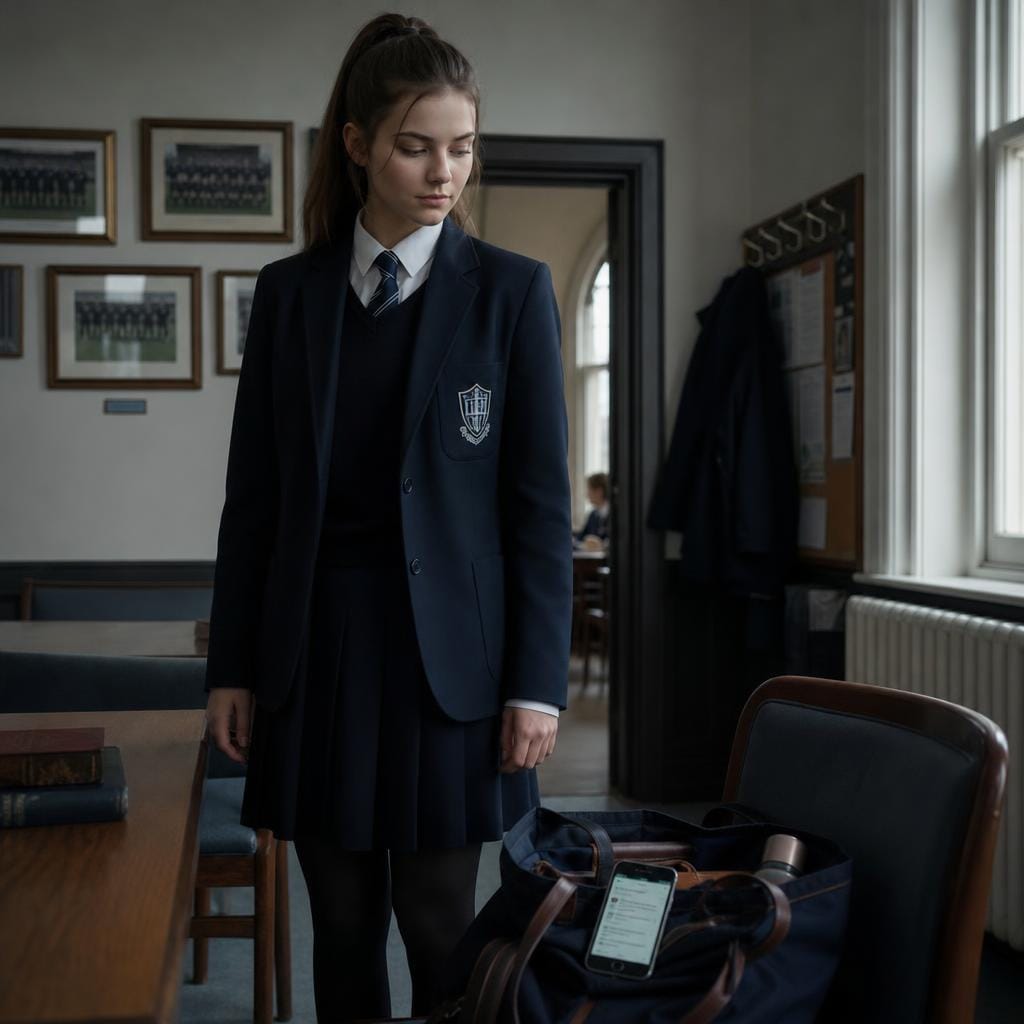
Two days later, Karen left it again, this time unlocked. Julia changed the background to a screenshot from Karen’s own Snapchat: an image posted weeks before and deleted after it had attracted the wrong sort of attention. She returned the phone to precisely the same position.
Julia did not see Karen’s first reaction. By lunch, however, the image had been seen by enough people. The following morning Karen stopped her outside registration.
“I’m sorry,” she said, loudly enough for the girls nearby to hear. “About the other day. It was stupid.”
Julia accepted the apology. Karen did not trouble her again.
She also began watching the groups that mattered.
Victoria had authority over the girls nearest to her. She could turn a silence into laughter by laughing first, or make someone conspicuous by looking past them. But the effect required her presence. If she left a room, her friends repeated her opinions for a while, then began to talk about something else.
Fiona, the head girl, was different. Girls outside her year knew her name; teachers paused to hear what she wanted. She did not need to keep reminding people of her position. At lunch she sometimes let a conversation continue without joining it, then settled a disagreement with a question or a slight shake of her head. Even her absences seemed accounted for: someone knew where she was, what she was doing and when she would return.
Julia had never seen her hurry. When a sixth-form prank damaged the patio furniture, Fiona listened to three competing explanations without raising her voice. By the end of the afternoon, two girls had apologised and a collection had begun for replacements. Julia did not know what Fiona had said to them.
It was the school mathematics challenge that proved decisive. The results were poor across the year groups, and even the sixth form had struggled. In the Reference Only room, Julia entered the marks system and found her own score: 96, the only one above ninety. Fiona’s was 56.
Julia rested her fingers on the keyboard.
A spectacular improvement would be noticed. An 81 was high enough to alter how the result was discussed but not so high that it became impossible. The system recorded when an entry had been amended. Julia had not yet discovered whether it recorded by whom.
She could leave the mark alone. Fiona barely knew her, and revealing access—even indirectly—might make Julia useful or make her dangerous.
Julia returned to the previous screen, waited, then opened Fiona’s result again. The cursor remained in the mark field. She changed 56 to 81 and checked the entry twice before saving it.
For several seconds nothing happened. Then the new mark appeared beside Fiona’s name, accompanied by a small amendment symbol Julia had not noticed before.
She logged out.
The next day, Fiona’s friends gathered around her in the common room. They congratulated her, some impressed, others less willing to be. Fiona accepted it all with a folded test paper resting on her knee.
Victoria, sitting on the window ledge, watched without joining them.
Later, in the lunch queue, Fiona caught Julia’s eye and beckoned her over.
“Hey, maths genius,” Fiona said. Her voice was quiet enough not to carry beyond the queue. “How did you do?”
“Ninety-six.”
“And how did I do?”
Julia looked at her. “Eighty-one.”
There was a pause. Fiona’s expression did not change, but she turned the folded test paper once between her fingers. The teacher’s original mark of 56 was still visible.
“That’s not what the system says,” Fiona said.
Julia felt the impulse to look away and resisted it. “I like numbers.”
Fiona smiled then, though it was not quite the smile she had given the girls in the common room.
“You can sit with us, if you want. There’s room at our table.” She glanced towards the window ledge. “Victoria doesn’t own the place, no matter what she thinks.”
Julia followed her into the refectory and took the empty seat beside her. The conversation moved between clothes, arguments and teachers’ habits. Julia listened, but it was harder than it had been from outside the group. Questions arrived without warning. Once she answered too quickly and Fiona looked at her; after that, Julia let someone else speak first.
She noticed that Fiona occasionally directed a factual question towards her. At other times Fiona asked what Julia thought, then made the decision herself. It was not deference, exactly. It felt more like being tried in several different positions to see where she fitted.
Within a week, Julia had a standing invitation to join Fiona and her friends at the preferred end of the refectory. Teachers began to treat her less as an alien presence and more as someone expected to be there.
Victoria did not openly contest the arrangement. She directed more of her attention towards drama club and cross-country and left Julia largely in peace. Occasionally Julia caught her looking across the refectory. She could not always tell whether the glance was meant for her or Fiona.
By the third visitation weekend, Julia was settled enough to look forward to her grandmother’s arrival. Eleanor arrived punctually, as always, but this time with a rare hint of animation in her step.
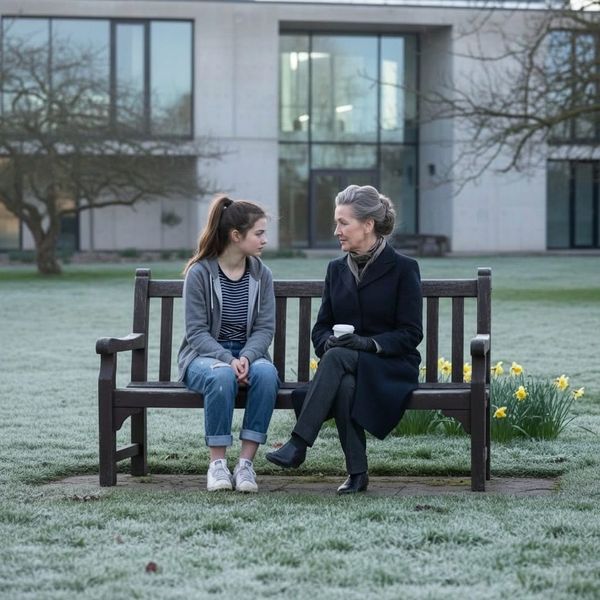
“Let’s walk,” she said, without pausing for coffee.
They circled the perimeter of the hockey pitch.
“I’ve heard interesting things,” Eleanor said, her voice pitched for Julia alone. “You’re making friends.”
“It’s easier than I thought,” Julia replied. “Sometimes people want to be led.”
“Not led,” Eleanor corrected. “Protected. There’s a difference.”
They walked in silence for a while, watching the game in progress: girls sprinting, shrieking and jockeying for the ball with an intensity Julia did not understand. One fell hard, stood up with mud across her cheek and immediately ran back into play.
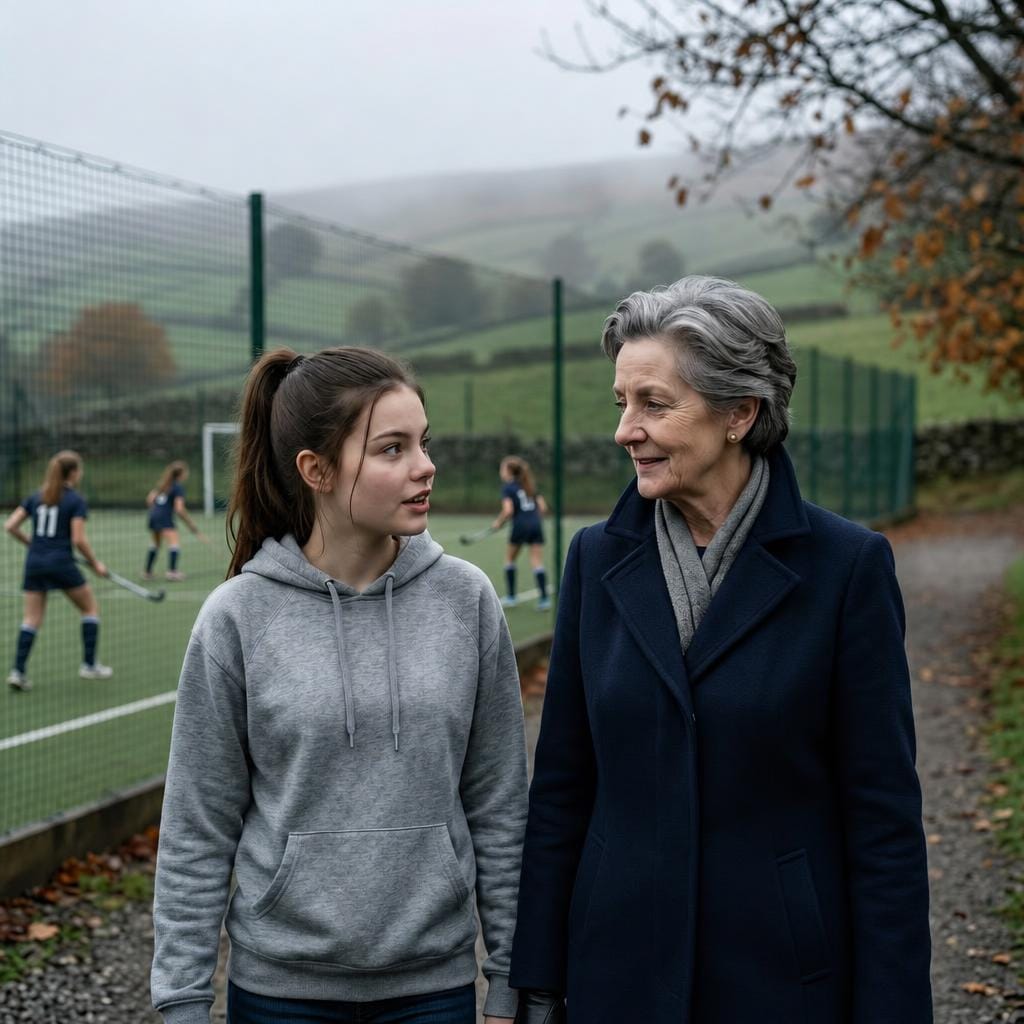
Eleanor said, “I suspect you’ve found your place, then.”
Julia thought of the keys, the password and her seat beside Fiona. “I think so.”
“What about the teachers? Are they as predictable as the girls?”
Julia weighed the question. “Some have patterns. I haven’t worked out the others.”
Eleanor nodded. “You should always study your teachers. Often, they’re the most vulnerable.”
They completed another circuit of the pitch, the sun warming the back of Julia’s neck. At the gate, Eleanor stopped and turned to face her.
“I’m proud of you,” she said, and there was no sarcasm or qualification in the words.
For a moment, Julia could not think of an answer. She looked towards the hockey pitch until the tightness in her throat passed.
Eleanor added, “Just remember: every system has a flaw. Even you.”
She left it at that.
Back in the library that afternoon, Julia watched Fiona at the long table beneath the windows. Fiona controlled the group with a glance or a tilt of her head, but Julia now saw the moments when she checked that people were still following. It was different from Victoria’s command: quieter and reaching further, though perhaps not effortless.
Julia wondered whether she would ever be able to do the same.
There was something else in the way she watched Fiona, something she could not place among the ordinary categories of attention. It caught in her stomach when Fiona stood too close in the lunch queue or when the scent of her shampoo remained after she had passed. Julia had observed desire in older girls—the sudden laughter, the altered posture, the attention disguised as indifference—but had not expected the same disturbance in herself.
She approached it through small tests. During group work, she made comments and occasionally withheld facts she knew, waiting to see whether Fiona would correct her. Sometimes Fiona did. Sometimes she appeared not to have heard. The uncertainty irritated Julia more than either result.
Once, at the library table, Fiona’s thigh pressed against hers as three girls squeezed onto a bench. Julia’s hands became briefly clumsy; she smudged a line of ink across her notes and had to copy the page again. Fiona gave no sign that she had noticed.
Julia watched how Fiona handled her phone—usually face-down, seldom left behind. She wondered what Fiona kept private and whether the altered mark had made her curious in return. The thought of knowing more was compelling, but so was the possibility that Fiona might already be watching her.
One of her mother’s old psychology books had described obsession as a state in which attention began to distort judgement. Julia could not remember the exact wording. She understood only that she had gained something at St Teresa’s and did not want an impulse she could not yet name to put it at risk.
In the Reference Only room, she opened the school network. The blue screen showed the sections she could enter and those still closed to her.
Across the library, Fiona turned a page without looking up.
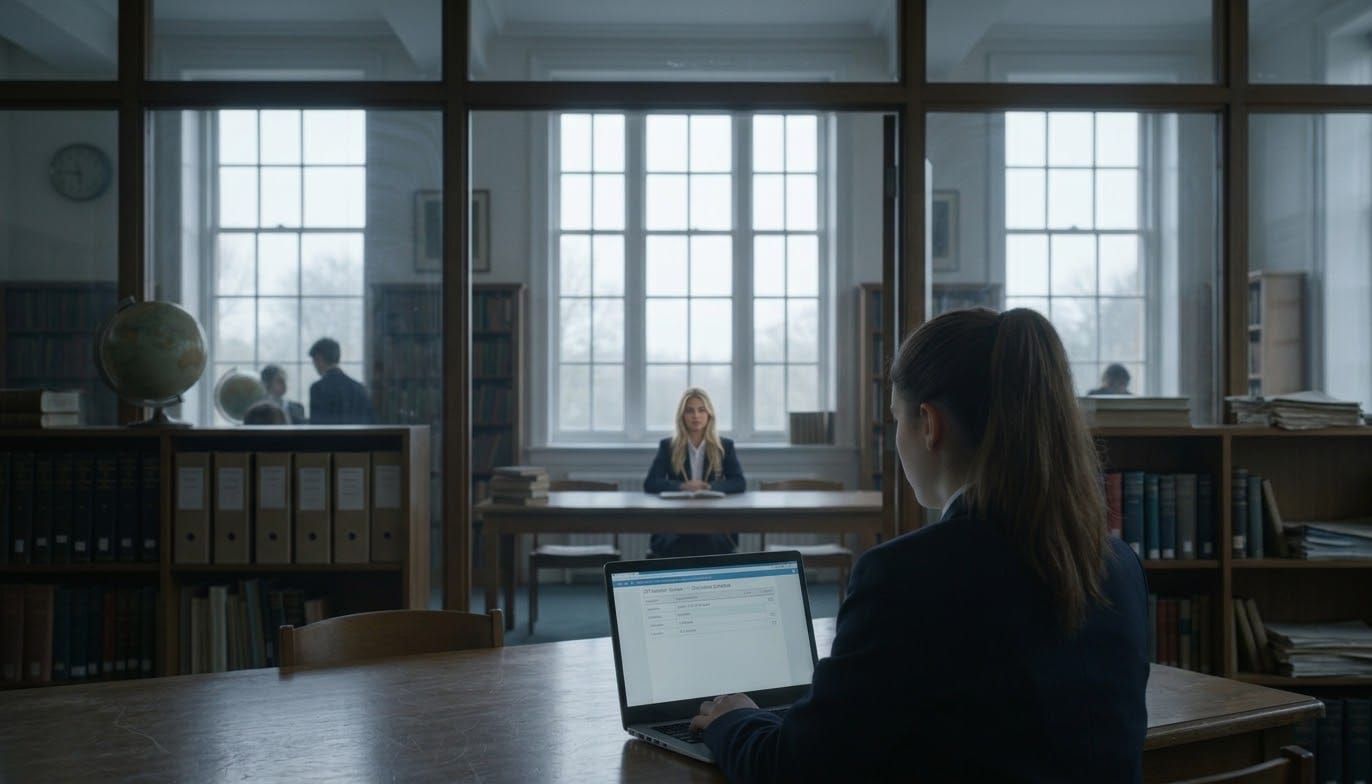
Julia had gained the seat she wanted. She was less certain who had made the invitation, or what Fiona expected her to do with it.